Speakasso › Paintings › The Last Supper
The Last Supper
Leonardo da Vinci, 1490
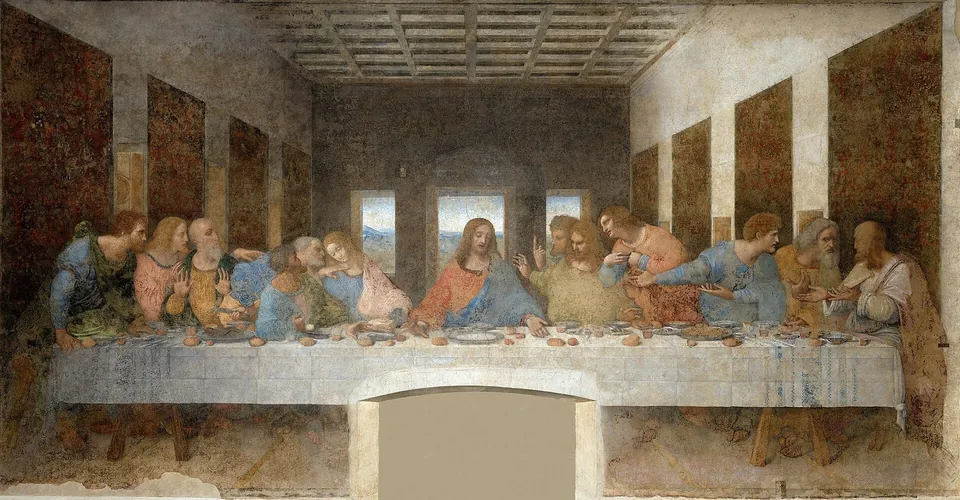
The mural fills the end wall of the refectory of a Dominican monastery. Leonardo chose the instant when Christ says 'One of you will betray me' and split the twelve disciples into four agitated groups of three. Instead of true fresco on wet plaster he painted on the dry wall so he could work slowly and revise, and within decades the paint began to flake. The picture survived a flood, use of the room as a stable and a wartime bomb, and after a twenty-year restoration it was unveiled again in 1999.
What is in the painting
- Three windows. Behind the figures are three openings onto a pale landscape, the middle one framing Christ's head.
- Four groups. The disciples cluster in threes, some leaping up, some whispering.
- Long table. A white cloth with plates and bread, everyone seated along one side.
Did you know? In 1652 the monks cut a doorway through the wall directly beneath Christ, and his feet were lost for good.
About the painting
- Artist
- Leonardo da Vinci (1452–1519)
- Year
- 1490
- Style
- High Renaissance
- Medium
- Tempera and oil on plaster
- Size
- 460 × 880 cm
- Where to see it
- Santa Maria delle Grazie, Milan
How to describe it in Speakasso
In Speakasso you describe the painting in your own words and an AI draws it again. These words are forbidden in this round — each one costs 15 points:
A description that scores high
Thirteen men sit in a row along one side of a long white-clothed dining board, all facing us. The calm central figure in red and blue sits with arms spread; the others lean, jump up and whisper in four groups of three. Behind him, three bright openings in the back wall show a pale blue countryside, the middle one framing his head. Faded earthy colors, soft light, old wall painting with strict perspective.
The tricky part: Instead of naming the furniture, say one long board covered with a white cloth, with everyone seated along the far side facing us.
The method behind it: what is painted first, then where things are, then colour and light, then the style. Read the full guide