Speakasso › Paintings › The Milkmaid
The Milkmaid
Johannes Vermeer, 1660
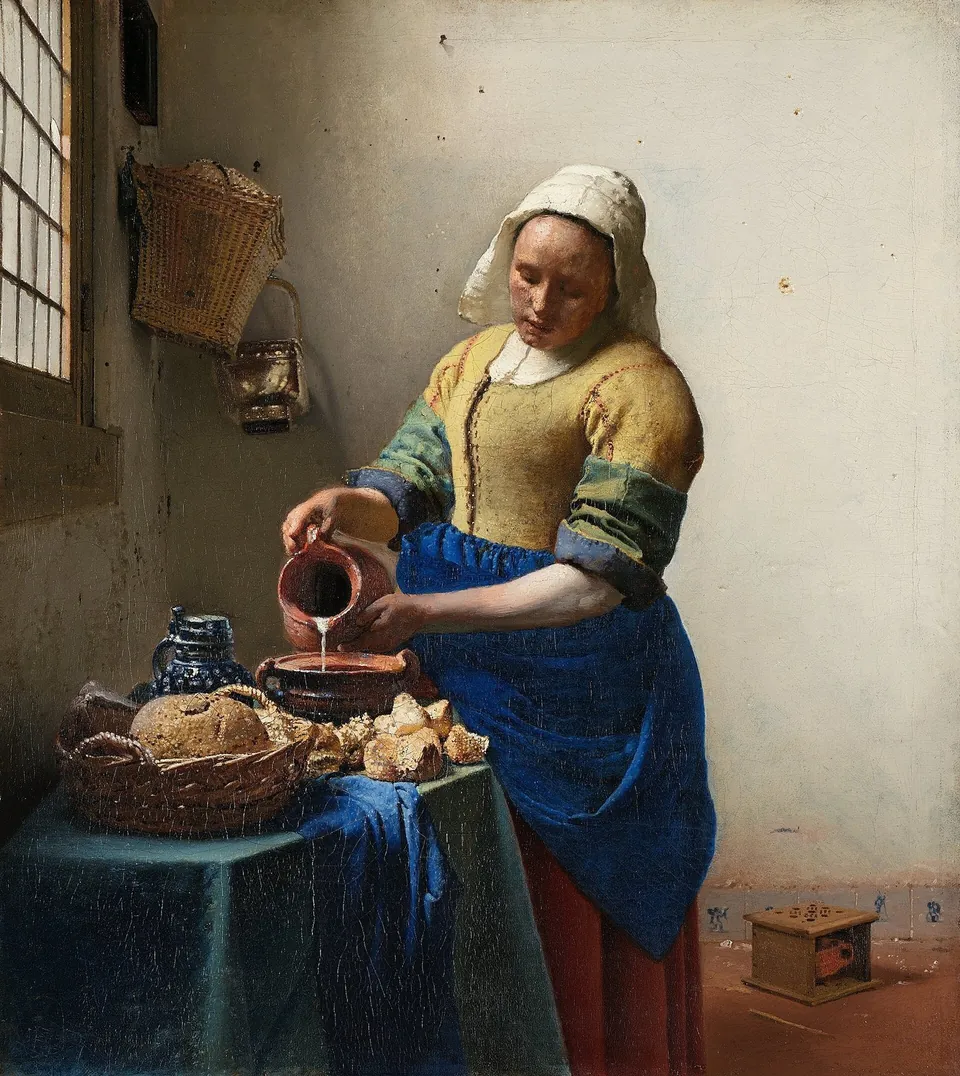
A kitchen maid, not really a milkmaid, pours a thin stream of milk into an earthenware bowl, and nothing else happens. Yet Vermeer paints this modest act so that it feels sacred. Light from the window falls on her white cap, on the crust of the bread, on the nails in the plaster. Her blue apron is painted in costly ultramarine. By the wall sits a foot warmer and tiles with tiny cupids. The solid figure and almost audible silence have made this small canvas one of the Netherlands' best-loved pictures.
What is in the painting
- Stream of milk. The woman tips an earthenware jug and a thin white stream runs into a bowl.
- Yellow and blue. A sturdy yellow bodice and a blue apron are the picture's main colours.
- Nails in the wall. The whitewashed wall is pocked with cracks and nail holes; the window on the left has one broken pane.
Did you know? A 2022 study revealed that Vermeer first painted a jug rack and a fire basket on the wall, then painted them out to leave the wall bare.
About the painting
- Artist
- Johannes Vermeer (1632–1675)
- Year
- 1660
- Style
- Dutch Golden Age
- Medium
- Oil on canvas
- Size
- 45.5 × 41 cm
- Where to see it
- Rijksmuseum, Amsterdam
How to describe it in Speakasso
In Speakasso you describe the painting in your own words and an AI draws it again. These words are forbidden in this round — each one costs 15 points:
A description that scores high
A sturdy young maid stands in a quiet kitchen, head bowed, carefully tipping a clay pitcher so a thin white stream pours into a bowl. She wears a white cap, a mustard-yellow bodice, a red skirt and a deep blue apron. On the table in front sit crusty loaves in a basket. Soft daylight falls from small glass panes on the left onto a whitewashed wall with nail holes. Calm, glowing Dutch oil painting.
The tricky part: Say she tips a clay pitcher so a thin white stream pours into a bowl, lit by daylight from small glass panes on the left.
The method behind it: what is painted first, then where things are, then colour and light, then the style. Read the full guide
More by Johannes Vermeer in the game