Speakasso › Paintings › The Fighting Temeraire
The Fighting Temeraire
J. M. W. Turner, 1839
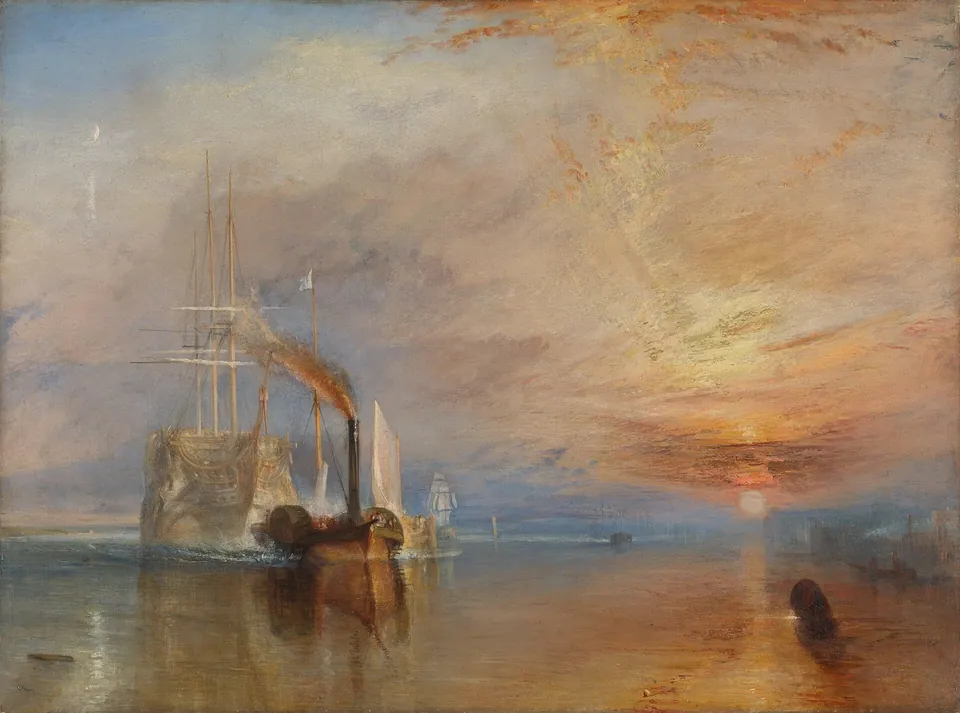
A ghostly white sailing ship, hero of the Battle of Trafalgar, is towed up the Thames to be broken up by a squat black steam tug whose funnel belches fire and smoke. A pale moon at left, a blazing sunset at right: the age of sail departs and the age of coal arrives. Turner took liberties, since the masts had been removed before the tow and the sun sets in the wrong direction, but the public was enraptured. He refused to sell the picture, called it 'my darling' and left it to the nation. In 2005 Britons voted it the country's favourite painting.
What is in the painting
- White sailing ship. A tall pale vessel with masts and furled sails at left.
- Black tug. A small dark steamboat ahead, orange smoke pouring from its funnel.
- Blazing sky. The right half is a fiery orange-red sunset over water.
Did you know? The painting appears on the Bank of England's £20 note alongside Turner's portrait.
About the painting
- Artist
- J. M. W. Turner (1775–1851)
- Year
- 1839
- Style
- Romanticism
- Medium
- Oil on canvas
- Size
- 91 × 122 cm
- Where to see it
- National Gallery, London
How to describe it in Speakasso
In Speakasso you describe the painting in your own words and an AI draws it again. These words are forbidden in this round — each one costs 15 points:
A description that scores high
A calm, wide estuary at dusk. On the left, a tall, ghostly pale old sailing warship with three bare masts is being towed along. In front of it, a small squat black steam vessel puffs orange fire and smoke from its tall funnel. The right half is a blazing orange-red evening sky mirrored in the water, and a pale crescent hangs at upper left. Hazy, glowing, loose romantic oil painting.
The tricky part: Call it a ghostly pale old sailing warship pulled by a squat black steam vessel, against a blazing orange-red evening sky.
The method behind it: what is painted first, then where things are, then colour and light, then the style. Read the full guide
More by J. M. W. Turner in the game